Overview

Sieger & Co created a custom production forecasting tool for an energy company in Nigeria.

This tool had to be capable of generating (or importing) and constraining well-based field-wide production forecasts using various forecasting methods.

Production forecasting aims to determine the future hydrocarbon production rate for a well based on historical performance, or on certain properties of the well and its reservoir. There are several methods for production forecasting available and oil and gas companies are constantly generating forecasts using one or more of these methods for financial and operational planning purposes.

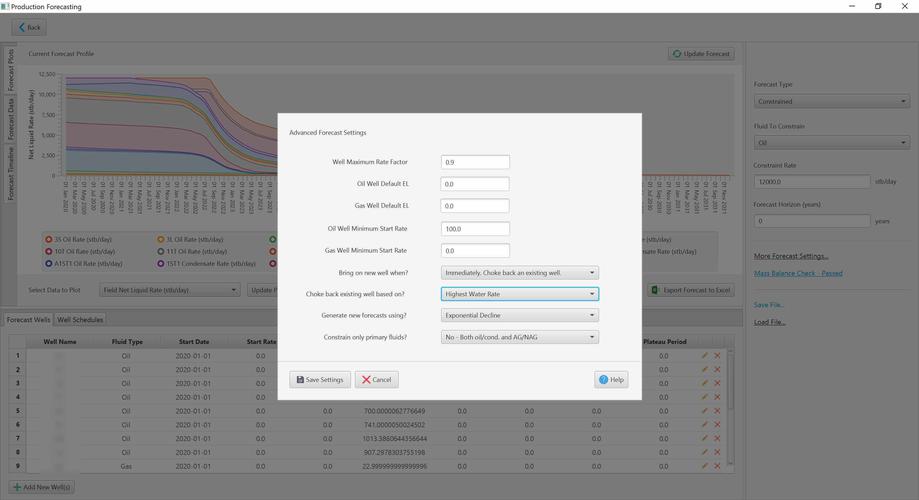
Due to facility handling constraints, sales contracts and/or regulatory directives, production from oil and gas fields are often capped at a specific maximum daily production volume which the total daily production volume for all wells on the fields cannot exceed. The practice of keeping forecast volumes at or below these maximum values is known as forecast constraining.

sieger & co oil and gas production forecasting
                                    software development image 1
sieger & co oil and gas production forecasting
                                    software development image 2
sieger & co oil and gas production forecasting
                                    software development image
sieger & co oil and gas production forecasting
                                    software development image 4
sieger & co oil and gas production forecasting
                                    software development image 5
sieger & co oil and gas production forecasting
                                    software development image 6
sieger & co oil and gas production forecasting
                                    software development image 7
sieger & co oil and gas production forecasting
                                    software development image 8
sieger & co oil and gas production forecasting
                                    software development image 9

Challenge

Our solution

Constraining production forecasts was too complex and time-consuming, and the planning team had a near unmanageable number of spreadsheet documents dedicated to constraining forecasts
The project and production planning team at this company previously worked by generating production forecasts for wells using various reservoir modelling and decline curve analysis (DCA) tools, copying these forecasts into spreadsheet software, and then manually constraining the generated forecasts using the spreadsheet software in a complex and very time-consuming process.

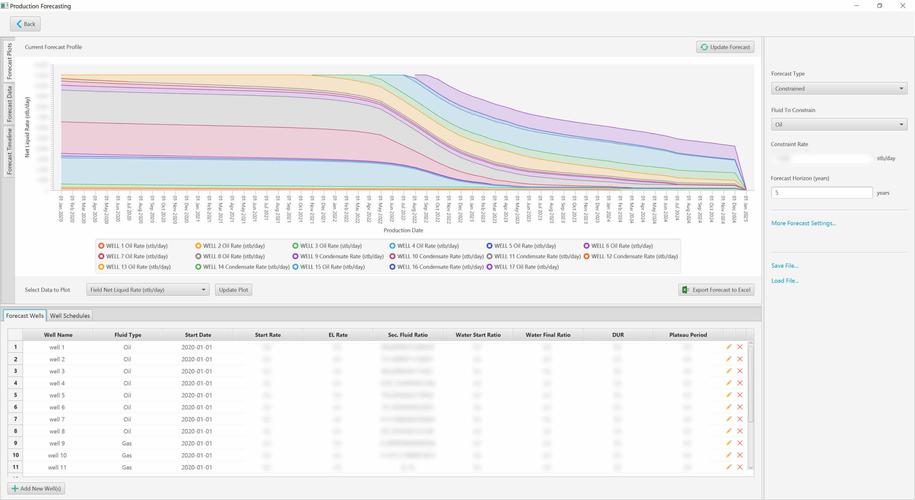
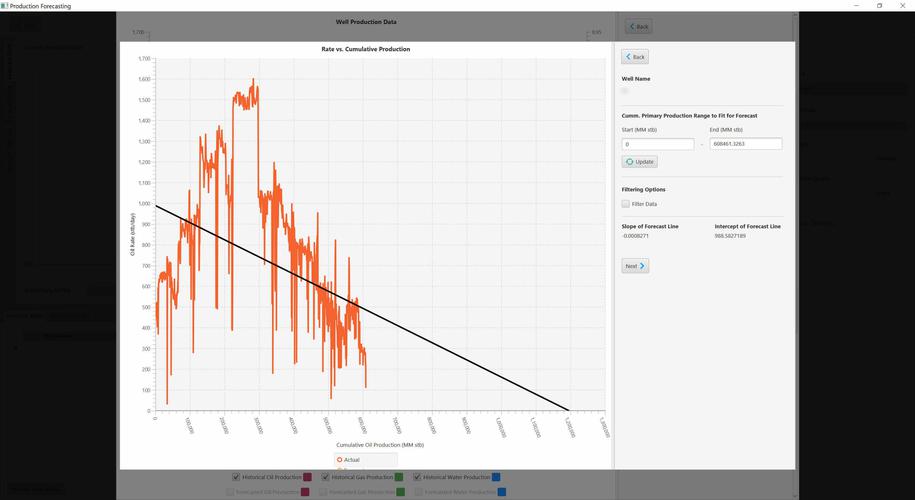
Sieger & Co designed and developed a custom production forecasting tool to solve this problem. The Sieger & Co designed tool is capable of generating well production forecasts using Arps DCA (Hyperbolic, Harmonic, Exponential decline), C-Curve, Logistic decay and Machine Learning forecasting methods (the latter being based on an SPE paper authored by some members of the engineering team at Sieger & Co).

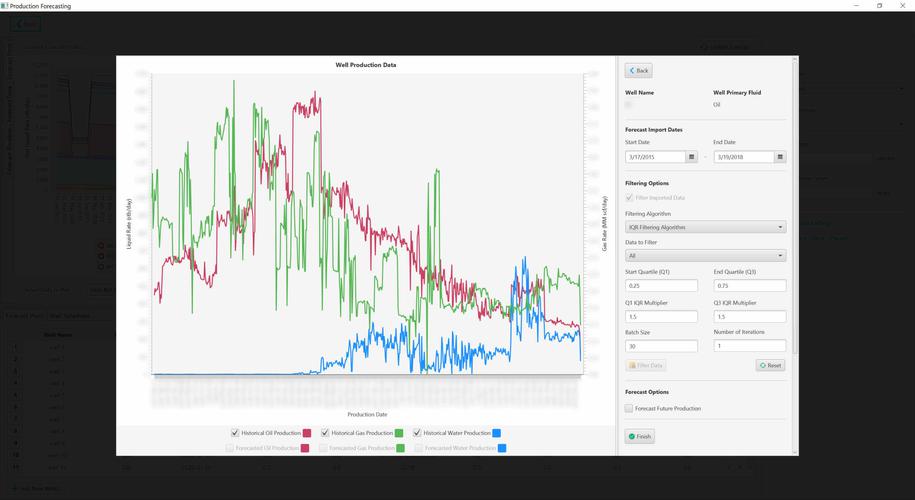
The tool also allows the company’s engineers to connect to their proprietary historical production database and directly import production history for multiple wells. This data can then be used to generate individual well forecasts which are aggregated to yield a field-wide production forecast. In addition, the tool is capable of generating forecasts for new wells based on field analog parameters and allows for the import of externally generated forecasts prior to production constraining or scheduling.

Once all well forecasts have been imported or generated, the field wide oil or gas production can very easily and quickly be constrained to whatever rate is required using the tool. The constrained forecasts can then be exported as daily, monthly or yearly production volumes.

Results:

After the previous spreadsheet based system was replaced using this tool, the members of the planning team were able to more efficiently (and much more quickly) import and generate forecasts for existing wells using the most recent available production data when a new constraint scenario needed to be considered, and the turn-around time for generating constrained production forecasts based on new constraint scenarios dropped by 80 percent.

Since the tool allows users to quickly create and discard a constrained production forecast for an imagined scenario, the number of files being archived by the forecasting team at this company also drastically reduced. This led to improved data storage efficiency within the subsurface department of the company.

Future Work:

Work is currently underway to develop and add an economic analysis module to this tool. This will enable the company's planning team go directly from historical production data (or an analog forecast) to financial projections with relatively little effort, all within the same tool.

Technologies:

Java SE (Desktop Application Development), SQL (Database Development).

Let us transform your operations.

sieger brochure download section